🚀 Stock Picking Strategies: मल्टीबैगर शेयर कैसे चुनें? (5 Golden Rules)
शेयर बाजार में सफल होने का कोई एक जादुई फॉर्मूला नहीं है, लेकिन सही 'Stock Picking' से आप लंबी अवधि में जबरदस्त वेल्थ क्रिएट कर सकते हैं।
You should remember one fundamental truth: there is no exact mathematical formula or algorithmic shortcut for guaranteed success in investing. With thousands of company stocks listed on the stock exchange, investors use a wide variety of investment philosophies, strategies, and mindsets to pick the right stock.
In this article, we will decode what Stock Picking truly means and outline the core principles every investor must always remember. It is a highly dynamic exercise that requires a balanced mindset.
📊 What is Stock Picking?
Stock picking is a beautiful combination of Art and Science. However, remembering one thing is crucial: relying too much on either extreme is dangerous. Discovering the right stock through analysis is only half the battle; waiting for the right time to buy that stock at a bargain price is what defines the success of an investor.
🏆 5 Golden Principles for Long-Term Stock Picking
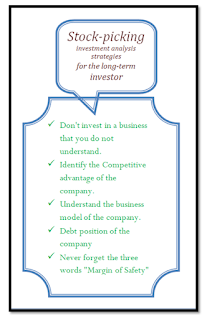
Don't miss the following principles, which are highly useful for building your own stock-picking investment analysis strategies:
- Understand the Business (Circle of Competence): Never invest in a business that you do not understand. While continuously expanding your financial knowledge regarding the global investment world is an excellent habit, always evaluate and pick companies whose products and revenue streams you can easily comprehend.
- Identify the Moat: Look for a durable competitive advantage or "moat" that protects the company from its rivals (e.g., strong brand, cost advantage, or network effect).
- Analyze the Business Model: Understand the business model to see exactly how the company generates cash flow and scales its operations.
- Check the Debt Position: A heavily indebted company is incredibly vulnerable during economic downturns. Always check the Debt-to-Equity ratio.
- Never Forget the 3 Words: Always demand a strong "Margin of Safety" to protect your capital from unforeseen market shifts.
⏳ What is the Right Time to Buy the Identified Stock?
There are basic principles (like initial screening) that individual investors can follow to develop their own strategies for determining the intrinsic value of a company. If a stock passes these filters, you add it to your watchlist.
Discovering the right stock that passes your strategy is not an immediate buy signal. Waiting for the right time and a bargain price is vital for securing strong investment returns. In the stock market, bargain prices are usually available when the market drops, crashes, or when temporary bad news hits a fundamentally strong sector. It is ultimately up to you whether you take market crashes as an opportunity or a panic.
📚 Stock Picking और वैल्यू इन्वेस्टिंग सीखने की बेस्ट किताबें (Amazon India):
One Up On Wall Street - Peter Lynch
मल्टीबैगर (Multibagger) स्टॉक्स को पहचानने और अपने 'Circle of Competence' का इस्तेमाल करने के लिए दुनिया की सबसे बेहतरीन किताब।
The Intelligent Investor - Benjamin Graham
Margin of Safety और सही वैल्यूएशन निकालने के सिद्धांत सीखने के लिए वारेन बफे द्वारा सुझाई गई मास्टर गाइड।
🔹 Efficient Market Theory vs Mr. Market: बाजार का सबसे बड़ा सीक्रेट
🔹 Margin of Safety: रिस्क को कम करने का जादुई फॉर्मूला
🔹 Asset vs Liability: अमीर और गरीब की सोच में क्या अंतर है?
❓ अक्सर पूछे जाने वाले सवाल (FAQs)
Stock Picking का मतलब है हजारों कंपनियों में से रिसर्च और फंडामेंटल एनालिसिस के आधार पर उन कुछ बेहतरीन कंपनियों के शेयरों को चुनना जो भविष्य में अच्छा रिटर्न दे सकें।
निवेश करने से पहले कंपनी का बिज़नेस मॉडल, उसकी उधारी (Debt), प्रतिस्पर्धी लाभ (Moat), और 'Margin of Safety' को समझना सबसे अधिक महत्वपूर्ण है।
एक अच्छा शेयर चुनना ही काफी नहीं है। सही समय तब होता है जब बाजार में गिरावट (Crash) या अस्थाई बुरी खबर के कारण वह शेयर अपनी 'Intrinsic Value' से सस्ते दाम (Bargain Price) पर मिल रहा हो।
⚠️ Disclaimer: This blog is exclusively for educational purposes and does not provide any advice/tips on investment or recommend buying and selling any stock. We are not SEBI registered financial advisors. Please consult your financial advisor before investing.
Comments
Post a Comment